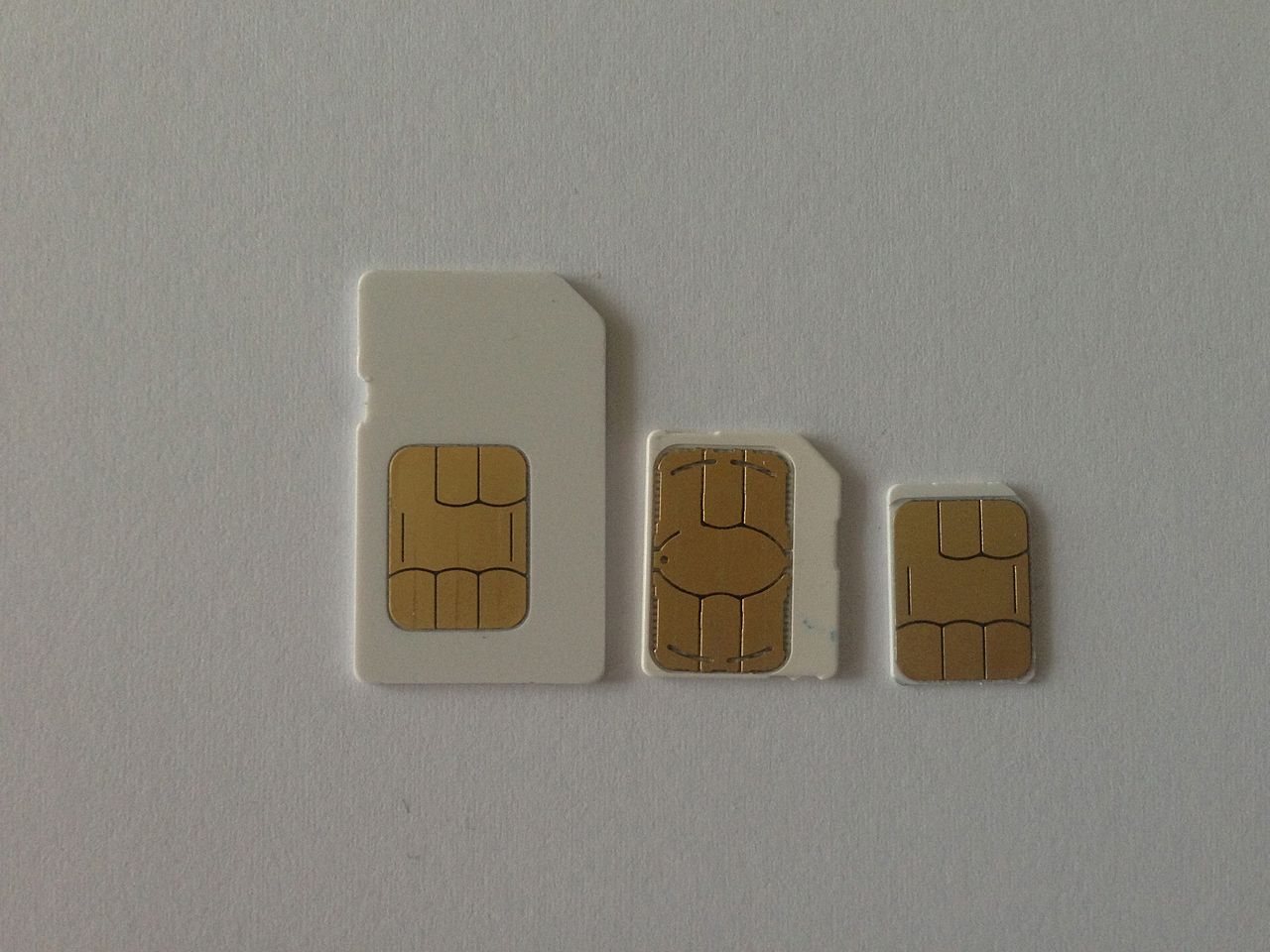
사진: Bidouille82 · CC BY-SA 3.0
Local SIM, eSIM or roaming: which is cheaper and what goes wrong
TopSpotsReviews · 2026년 10월 22일 업데이트
🌐 이 아티클은 현재 영어로만 제공됩니다.
Is an eSIM cheaper than roaming? Often, but not if your plan already covers the country. If your home plan charges extra abroad, a travel eSIM or a local SIM bought for the destination is often cheaper for the same data, and it is the alternative that the consumer guides of the US and UK regulators suggest. Roaming wins when it costs nothing extra, as for EU plans inside the EU, or when a short trip makes a carrier day pass the cheapest option. Whichever you choose, check three things first: that your phone is unlocked, how much data you really use in a day, and how you will keep receiving texts on your home number.
eSIM vs local SIM vs roaming: the short answer
There are three ways to get mobile data abroad, besides Wi-Fi. Roaming keeps your home SIM, and your home carrier bills you for using a foreign network. A local SIM is a physical card from a carrier in the country you visit. A travel eSIM is the same idea without the card: a plan you download onto the phone. The GSMA, the mobile industry's association, describes the eSIM as a SIM downloaded into a chip built into the device, and says a phone can store several operator profiles and switch between them.
The FCC, the US communications regulator, warns that roaming rates may be much higher than at home, for calls, voicemail, texts and data, and lists a local SIM or an eSIM as the alternative. The UK regulator Ofcom suggests a SIM for the country you visit, and Google's Pixel help suggests a prepaid eSIM to avoid roaming charges. The big exception is a plan that already covers the country.
| Roaming | Local SIM | Travel eSIM | |
|---|---|---|---|
| What you buy | Nothing, or a pass or bundle from your carrier | A prepaid card from a carrier in the country | A plan downloaded to the phone |
| Unlocked phone needed | No | Yes | Yes, and it must support eSIM |
| Your home number | Works as usual | Stays on only in a dual-SIM phone | Stays on in a dual-SIM phone |
| Local phone number | No | Depends on the plan | Depends on the plan |
| Main risk | A large bill, sometimes a month later | Finding a shop on arrival; ID checks in some countries | Installation needs Wi-Fi; terms vary a lot |
How to compare the price: per GB, per day, per trip
Prices change too fast for a list to stay useful, so compare offers the same way every time: how much data you will use, how many days the plan lasts, and what happens when the data runs out.
- Daily use. Ericsson's Mobility Report puts the global average at about 22 GB of mobile data a month per smartphone in 2025, roughly 0.7 GB a day, ranging from 5.3 GB a month in Sub-Saharan Africa to 37 GB in India, Nepal and Bhutan. Your phone's settings show how much mobile data you have used over a period (often the billing cycle, or since the counter was last reset); divide it by the number of days for a starting point.
- Video breaks the budget. Netflix's help centre says its Automatic setting on mobile gives about 4 hours of viewing per GB, while high-definition video can use up to 3 GB an hour. Download films at home.
- Price per GB. Divide the price by the data. On an undated page, Japan's national tourism organisation (JNTO) gives a rough guide of about 3,000 yen for 1 GB valid for 30 days: 3,000 yen per GB. Ten times the data at twice the price costs a fifth as much per GB.
- Validity. A 30-day plan on a 10-day trip wastes nothing if you use up the data; a 7-day plan means buying again.
- Per-day charges. Ask what counts as a day (a calendar day, in which time zone, or 24 hours from first use) and whether a background update can trigger one.
- After the allowance. Check whether the plan stops, slows down or switches to pay-as-you-go, and at what price.
Which is cheapest for a 1-week or a 3-week trip?
A per-day charge grows with every day of the trip; a bundle with a fixed amount of data and a validity period doesn't. The table is a worked example with made-up round prices, in no particular currency: they are not real offers or typical market prices, only numbers to show the arithmetic for someone who uses about 0.5 GB a day.
| Option (made-up prices) | 1 week (about 3.5 GB) | 3 weeks (about 10.5 GB) | Plan price per GB |
|---|---|---|---|
| Carrier day pass at 10 a day | 70 | 210 | 10 a day, whether you use 50 MB or 2 GB |
| Travel eSIM: 5 GB for 15 or 20 GB for 40, valid 30 days | 15 (5 GB plan) | 40 (20 GB plan) | 3, then 2 |
| Local prepaid SIM: 20 GB for 20, valid 30 days | 20 | 20 | 1 |
| Roaming already included in your plan | 0 extra | 0 extra (fair-use limits apply) | — |
Made-up prices for the arithmetic only: not real offers or market prices. Real prices vary by country, carrier and season.
So which one wins?
In this example, a two-day weekend on the day pass costs 20, about the same as either bundle and with nothing to install; over three weeks the day pass costs 210, five to ten times as much as either bundle. The same reasoning applies to an international SIM card bought before the trip: compare the price per GB, the days of validity and whether it includes a number.
Two costs don't appear in the table. A local SIM costs time on arrival: a shop, a queue and, in some places, registration with a passport. And a roaming bill can come late: the FCC notes that charges may not show up until a billing cycle after you are back, so track your use as you go.
Is your phone unlocked, and does it support eSIM?
A SIM or eSIM from another carrier only works in an unlocked phone. The FCC advises asking your carrier to unlock it; Apple says only your current carrier can unlock an iPhone and that it might take a few days, so ask well before the trip.
On an iPhone, go to Settings > General > About: “No SIM restrictions” next to Carrier Lock means it is unlocked. Apple lists the iPhone XS, XS Max, XR and later as supporting eSIM, and the iPhone 13 and later can also use two eSIMs at once.
On Android, it depends on the maker and the carrier. Google says Pixel phones from the Pixel 4 onwards work with eSIM, subject to the carrier, and that a Pixel 7 or later can use two eSIM profiles at once if the carrier allows it. For other phones, the FCC suggests the owner's manual or the maker's website. It also warns that a phone may not work on another country's networks, or may make calls but not send texts or use data.
When roaming is the right answer
If your plan comes from an EU operator, using it in the 27 EU countries, Iceland, Liechtenstein and Norway costs the same as at home under “roam like at home”, and the European Commission says that since 1 January 2026 this also covers Ukraine and Moldova. The rule has applied since 15 June 2017, and the current regulation, (EU) 2022/612, runs until 30 June 2032.
It is meant for travel, not for living abroad. Under the fair-use rules, an operator can look at your use over 4 months and add a small surcharge if, over that period, you spend more time abroad than at home and roam more than you use your phone at home, and it may set a roaming data limit on unlimited or very cheap plans. By default, extra data roaming charges stop at €50 (excluding VAT) a month unless you choose another limit.
Watch the edges. The UK has been outside these rules since 31 December 2020; Ofcom says what UK providers can charge in the EU is no longer capped. On ships and planes, phones can connect to satellite networks that “roam like at home” doesn't cover and that usually carry high surcharges; Your Europe suggests turning roaming off or using flight mode on board.
Elsewhere, roaming makes sense on a very short trip, when your carrier's package for the country costs less than a local option, when you need your number for calls, or when your phone is locked. The FCC suggests checking that roaming is activated and finding out how to track your usage; Ofcom notes that UK providers must let you set a bill limit, and any carrier is worth asking for one.
Keep your home number: the dual-SIM setup
A phone with two lines lets a local SIM or travel eSIM carry the data while your home line stays on for calls and texts, including one-time codes from your bank. Apple says Dual SIM gives you two active numbers, but an iPhone uses one cellular data network at a time. If you keep both lines on, your home line keeps working; if you use only the travel eSIM, iMessage and FaceTime continue on your home number.
- Install the travel eSIM or insert the local SIM, and label the lines, for example Home and Travel.
- Set the travel line as the line for mobile data.
- Keep the home line on for calls and texts, with data roaming off; Ofcom and WhatsApp both suggest turning data roaming off to avoid data charges.
- Ask your carrier what incoming calls and texts cost there: the FCC notes that roaming rates can apply to calls, voicemail and texts, and Apple warns that the home line may still incur roaming fees.
- Switching the home line off avoids roaming charges, but SMS codes won't arrive until you switch it back on.
WhatsApp and other apps tied to your number
WhatsApp, iMessage and FaceTime keep working on your home number over any data connection. WhatsApp's help centre says that with a local SIM you can still use WhatsApp with your home number, but that to re-verify the account you need that number's SIM in the phone, with phone or SMS service on; abroad, it suggests turning on roaming to receive the code. Its travel page adds that, if you re-register, the code can also come by email, provided you added an email address to your account beforehand. So don't reinstall apps or switch phones during the trip.
What goes wrong, and how to avoid it
Several of these only show up on arrival day, when you may be tired and offline.
- The eSIM won't install. Apple says an iPhone needs Wi-Fi or a hotspot to activate an eSIM, except some eSIM-only models in some countries. Install it at home. JNTO says Japan's major international airports offer free Wi-Fi, but don't count on that everywhere.
- The second line doesn't work. Apple's checks: the phone is unlocked, each plan is set up with no billing block, and both carriers show in the status bar. If that fails, contact the carrier.
- The plan's days run out early. Check whether validity starts on installation, on first connection at the destination or on a set date.
- No local number. Some travel plans are data only; if a taxi, a restaurant or a host needs to call you, check that the plan includes a number.
- No SMS codes. They go to your home number, so that line has to be on.
- Sharing data. If you will share data with a laptop or a companion (hotspot or tethering), check that the plan's terms allow it.
- “Unlimited” has a limit. Even EU rules let operators cap data on unlimited plans when roaming; look for a fair-use clause and what happens once you pass it.
- ID is needed. In Hong Kong, every SIM card from a local provider, prepaid included, must be registered before activation; visitors without a Hong Kong identity card can use a passport, according to the regulator OFCA.
- Emergency calls. The FCC notes that in some EU countries a phone needs a SIM card to call 112, the emergency number; Ireland's regulator says the welcome message from an EU operator explains how to reach 112.
- Offline maps don't do public transport. Offline, Google Maps gives driving directions only: transit, walking and cycling directions need a connection.
Decision table: which one for your trip?
Start from your situation, then compare current prices as described above. For the rest of the preparation, see our guide “Before you fly: a trip checklist that won't go out of date”.
| Your situation | Usually the best bet |
|---|---|
| EU plan, travelling in the EU, Iceland, Liechtenstein, Norway, Ukraine or Moldova | Roaming at home prices (fair use applies) |
| A trip of 1–3 days, and your carrier sells a day pass | The day pass, or Wi-Fi only |
| One country for a week or more, unlocked phone with eSIM | A travel eSIM installed at home over Wi-Fi |
| A long stay in one country, and you need a local number | A local SIM with calls and texts |
| Several countries in one trip | One plan that covers all of them, compared per GB |
| Locked phone, or no eSIM | A roaming pass, or ask your carrier to unlock it well ahead |
| You need SMS codes from home | Dual SIM: data on the travel line, home line on for texts |
A rule of thumb, not a recommendation of any seller.
Quick answers
Common questions, answered from this guide.
- Is an eSIM cheaper than roaming? When your plan charges extra at the destination, often yes; compare the price per GB first. When it includes the country, as EU plans do inside the EU, roaming costs nothing extra.
- Local SIM or eSIM? An eSIM installs before you leave, with no shop; a local SIM can cost less per GB but takes time on arrival and may need ID.
- Can I keep WhatsApp on my number? Yes. You only need the home SIM in the phone (or an email address added to the account in advance) if WhatsApp asks you to verify the number again.
- Will my bank's SMS codes arrive? Only if your home line stays on. Keep it on, with data roaming off.